Detect Small Objects
This guide shows how to detect small objects with Inference using InferenceSlicer.
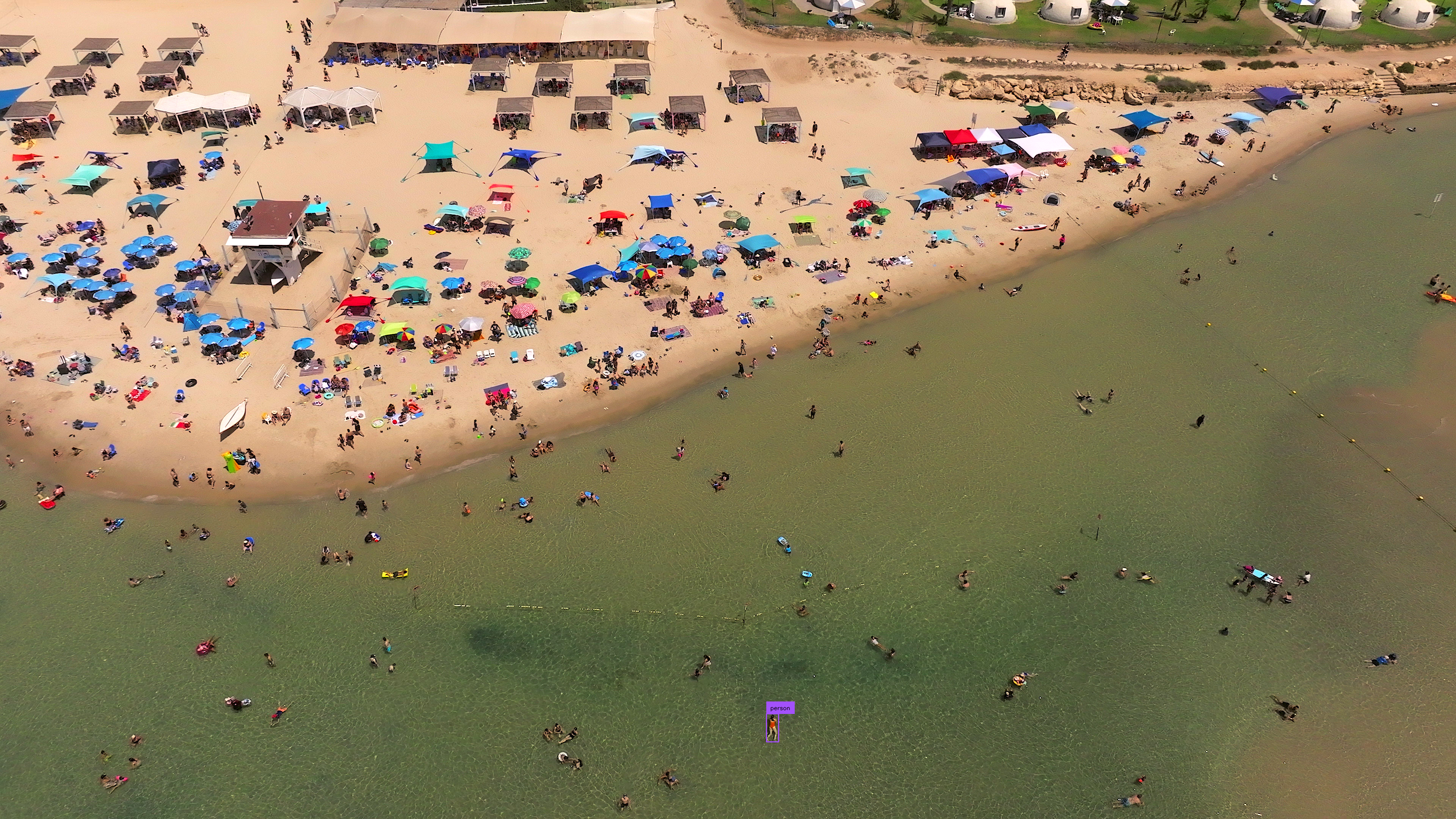
Baseline Detection
Small object detection in high-resolution images presents challenges due to the objects' size relative to the image resolution.
Running a standard detection model on the full image establishes a baseline for comparison. Load your chosen model, pass the image through it, and convert the results into a Detections object. This baseline reveals how many small objects the model misses at native resolution, motivating the sliced inference approach shown later.
from ml_pipes.core import Pipeline
from ml_pipes.standard import Recall, Select, Store
from ml_pipes.supervision import BoxAnnotator, Detections, ImageToArray, LabelAnnotator, PlotImage
from ml_pipes.supervision.inference import RoboflowInference
from ml_pipes.vision import Decode, LoadFile

pipeline = Pipeline(
    [
        LoadFile(),
        Decode(),
        ImageToArray(),
        Store("source_image"),
        RoboflowInference(model_id="yolov8x-640"),
        Select(0),
        Detections.FromInference(),
        Recall("source_image", prepend=True),
        BoxAnnotator(),
        LabelAnnotator(show_class=True, show_confidence=True),
        PlotImage(at=0),
    ]
)

annotated_image, detections = pipeline("<SOURCE_IMAGE_PATH>")
import cv2
import supervision as sv
from inference import get_model

model = get_model(model_id="yolov8x-640")
image = cv2.imread("<SOURCE_IMAGE_PATH>")
results = model.infer(image)[0]
detections = sv.Detections.from_inference(results)

box_annotator = sv.BoxAnnotator()
label_annotator = sv.LabelAnnotator()

annotated_image = box_annotator.annotate(
    scene=image,
    detections=detections,
)
annotated_image = label_annotator.annotate(
    scene=annotated_image,
    detections=detections,
)
Input Resolution
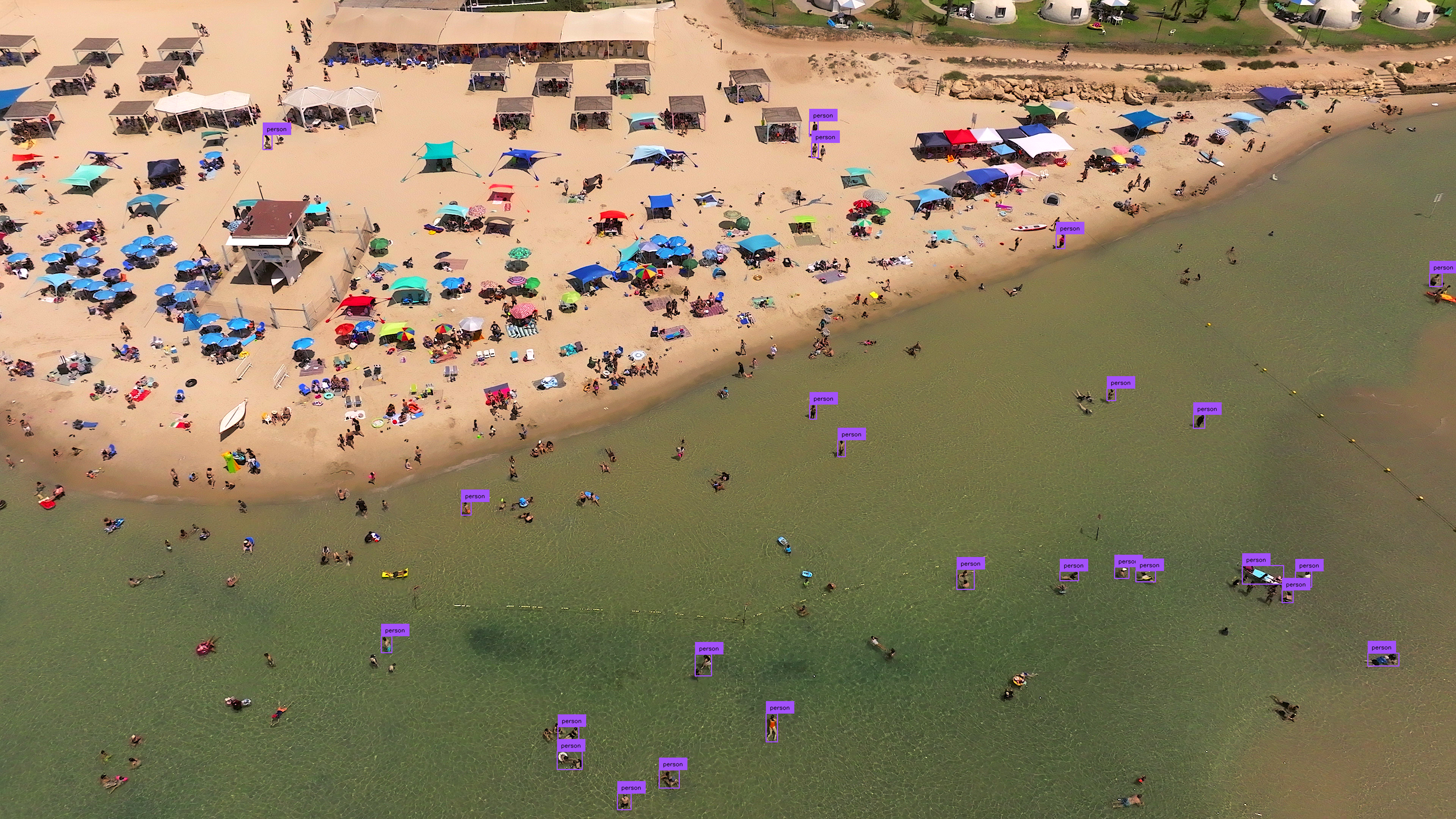
Modifying the input resolution of images before detection can enhance small object identification at the cost of processing speed and increased memory usage. This method is less effective for ultra-high-resolution images (4K and above).
from ml_pipes.core import Pipeline
from ml_pipes.standard import Recall, Select, Store
from ml_pipes.supervision import BoxAnnotator, Detections, ImageToArray, LabelAnnotator, PlotImage
from ml_pipes.supervision.inference import RoboflowInference
from ml_pipes.vision import Decode, LoadFile

pipeline = Pipeline(
    [
        LoadFile(),
        Decode(),
        ImageToArray(),
        Store("source_image"),
        RoboflowInference(model_id="yolov8x-1280"),
        Select(0),
        Detections.FromInference(),
        Recall("source_image", prepend=True),
        BoxAnnotator(),
        LabelAnnotator(show_class=True, show_confidence=True),
        PlotImage(at=0),
    ]
)

annotated_image, detections = pipeline("<SOURCE_IMAGE_PATH>")
import cv2
import supervision as sv
from inference import get_model

model = get_model(model_id="yolov8x-1280")
image = cv2.imread("<SOURCE_IMAGE_PATH>")
results = model.infer(image)[0]
detections = sv.Detections.from_inference(results)

box_annotator = sv.BoxAnnotator()
label_annotator = sv.LabelAnnotator()

annotated_image = box_annotator.annotate(
    scene=image, detections=detections)
annotated_image = label_annotator.annotate(
    scene=annotated_image, detections=detections)
Inference Slicer
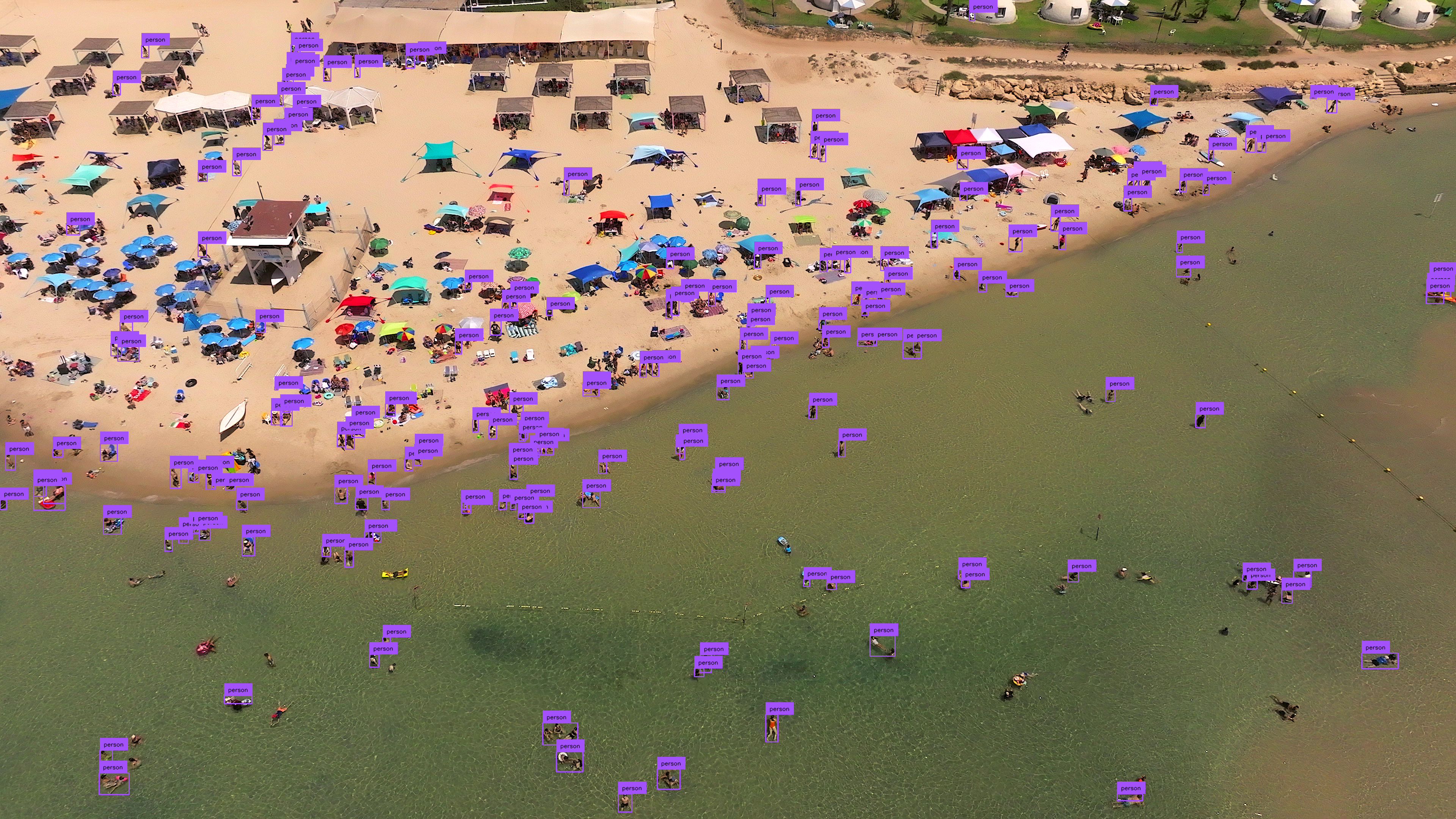
InferenceSlicer processes high-resolution images by dividing them into smaller segments, detecting objects within each, and aggregating the results.
from ml_pipes.core import Pipeline
from ml_pipes.standard import Gather, Pick, Recall, Scatter, Select, Store
from ml_pipes.supervision import BoxAnnotator, Detections, ImageToArray, LabelAnnotator, PlotImage
from ml_pipes.supervision.inference import RoboflowInference
from ml_pipes.vision import Decode, LoadFile, Tile

pipeline = Pipeline(
    [
        LoadFile(),
        Decode(),
        Store("source_image"),
        Tile(slice_wh=(320, 320), overlap_wh=(80, 80)),
        Store("tile_rects", source=1),
        Pick(0),
        Scatter(max_concurrency=4),
        RoboflowInference(model_id="yolov8x-640"),
        Select(0),
        Detections.FromInference(),
        Gather(),
        Recall("tile_rects"),
        Detections.Stitch(),
        Detections.NMM(iou_threshold=0.5),
        Store("detections"),
        Recall("source_image"),
        Pick(1),
        ImageToArray(),
        Recall("detections"),
        BoxAnnotator(),
        LabelAnnotator(show_class=True, show_confidence=True),
        PlotImage(at=0),
    ]
)

annotated_image, detections = pipeline("<SOURCE_IMAGE_PATH>")
import cv2
import numpy as np
import supervision as sv
from inference import get_model

model = get_model(model_id="yolov8x-640")
image = cv2.imread("<SOURCE_IMAGE_PATH>")

def callback(image_slice: np.ndarray) -> sv.Detections:
    results = model.infer(image_slice)[0]
    return sv.Detections.from_inference(results)

slicer = sv.InferenceSlicer(callback = callback)
detections = slicer(image)

box_annotator = sv.BoxAnnotator()
label_annotator = sv.LabelAnnotator()

annotated_image = box_annotator.annotate(
    scene=image, detections=detections)
annotated_image = label_annotator.annotate(
    scene=annotated_image, detections=detections)
Small Object Segmentation
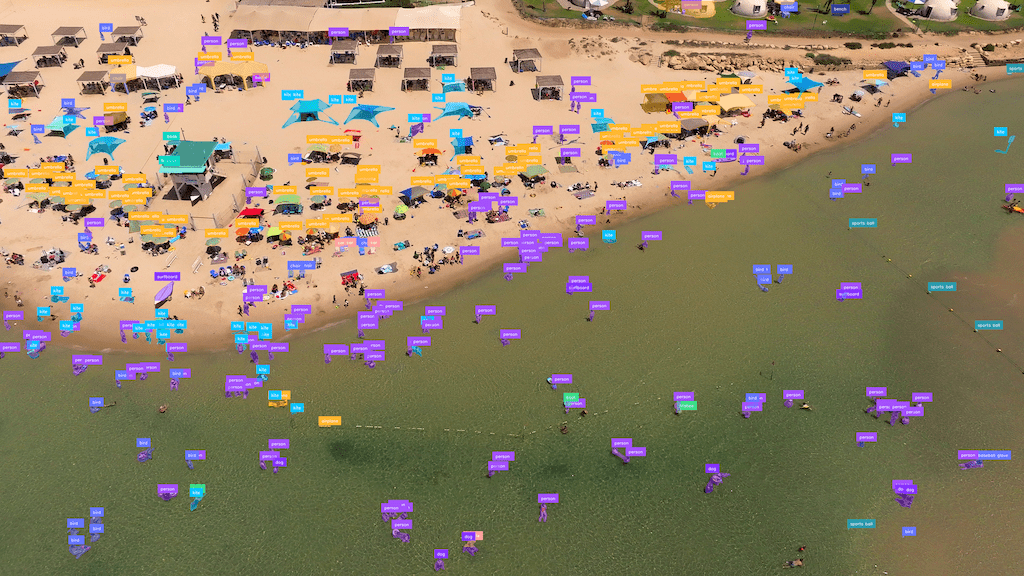
InferenceSlicer can perform segmentation tasks too.
from ml_pipes.core import Pipeline
from ml_pipes.standard import Gather, Pick, Recall, Scatter, Select, Store
from ml_pipes.supervision import Detections, ImageToArray, LabelAnnotator, MaskAnnotator, PlotImage
from ml_pipes.supervision.inference import RoboflowInference
from ml_pipes.vision import Decode, LoadFile, Tile

pipeline = Pipeline(
    [
        LoadFile(),
        Decode(),
        Store("source_image"),
        Tile(slice_wh=(320, 320), overlap_wh=(80, 80)),
        Store("tile_rects", source=1),
        Pick(0),
        Scatter(max_concurrency=4),
        RoboflowInference(model_id="yolov8x-seg-640"),
        Select(0),
        Detections.FromInference(),
        Gather(),
        Recall("tile_rects"),
        Detections.Stitch(),
        Detections.NMM(iou_threshold=0.5),
        Store("detections"),
        Recall("source_image"),
        Pick(1),
        ImageToArray(),
        Recall("detections"),
        MaskAnnotator(),
        LabelAnnotator(show_class=True, show_confidence=True),
        PlotImage(at=0),
    ]
)

annotated_image, detections = pipeline("<SOURCE_IMAGE_PATH>")
import cv2
import numpy as np
import supervision as sv
from inference import get_model

model = get_model(model_id="yolov8x-seg-640")
image = cv2.imread("<SOURCE_IMAGE_PATH>")

def callback(image_slice: np.ndarray) -> sv.Detections:
    results = model.infer(image_slice)[0]
    return sv.Detections.from_inference(results)

slicer = sv.InferenceSlicer(callback = callback)
detections = slicer(image)

mask_annotator = sv.MaskAnnotator()
label_annotator = sv.LabelAnnotator()

annotated_image = mask_annotator.annotate(
    scene=image, detections=detections)
annotated_image = label_annotator.annotate(
    scene=annotated_image, detections=detections)
Frequently Asked Questions
How do I detect small objects with supervision?
Use sv.InferenceSlicer to split a high-resolution image into overlapping tiles, run detection on each tile, and merge results with non-maximum suppression. This dramatically improves recall for tiny targets.
What overlap should I use between tiles?
InferenceSlicer takes overlap in pixels via overlap_wh, not as a percentage. The default is 100 pixels in both directions. Increase overlap_wh when objects are close to the tile size or often appear on tile boundaries, and decrease it when speed is more important.
Can I use InferenceSlicer with any detection model?
Yes. Wrap any model or converter path that can produce sv.Detections in a callback, pass that callback to sv.InferenceSlicer(callback=...), and then call the slicer with your image.
Author
- Piotr Skalski — Computer Vision Engineer, Roboflow