Filter Detections
The advanced filtering capabilities of the Detections class offer users a versatile and efficient way to narrow down and refine object detections. This section outlines various filtering methods, including filtering by specific class or a set of classes, confidence, object area, bounding box area, relative area, box dimensions, and designated zones. Each method is demonstrated with concise code examples to provide users with a clear understanding of how to implement the filters in their applications.
The ml-pipes examples abbreviate their shared loading and inference prefix as
...; see Detect and Annotate for the complete
detection pipeline.
by specific class
Allows you to select detections that belong only to one selected class.
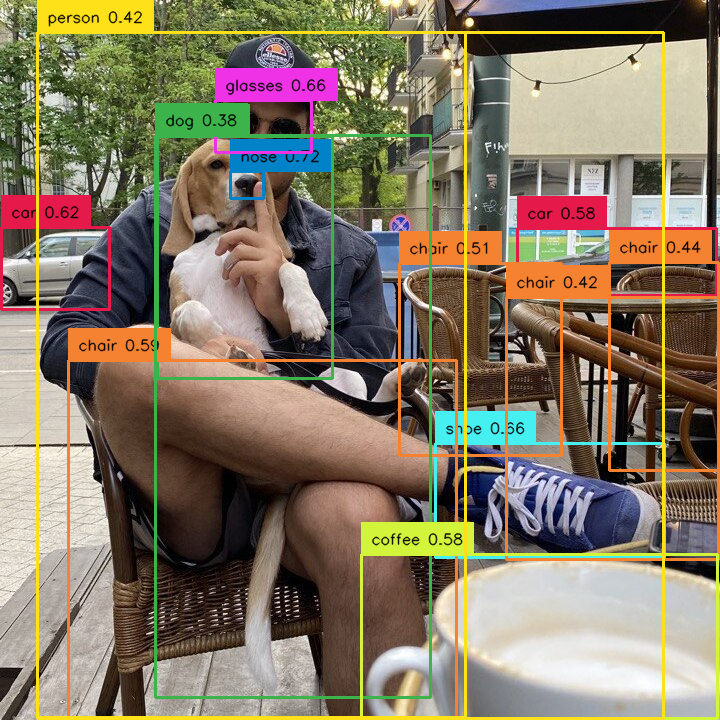
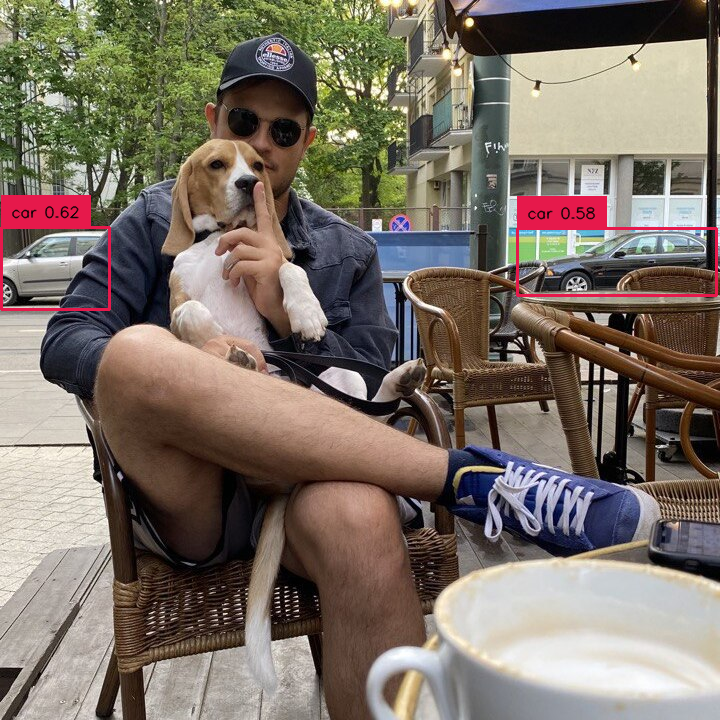
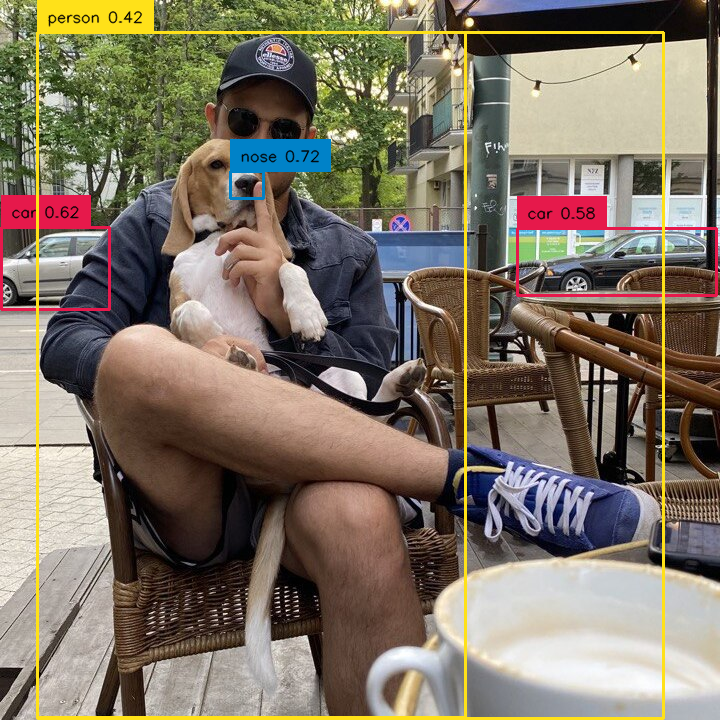
by set of classes
Allows you to select detections that belong only to selected set of classes.
import numpy as np

selected_classes = [0, 2, 3]

from ml_pipes.core import Pipeline
from ml_pipes.supervision import Detections

pipeline = Pipeline(
    [
        ...,
        Detections.FromInference(),
        Detections.Filter(
            lambda detections: np.isin(detections.class_id, selected_classes)
        ),
    ]
)

filtered_detections = pipeline(detections)
by confidence
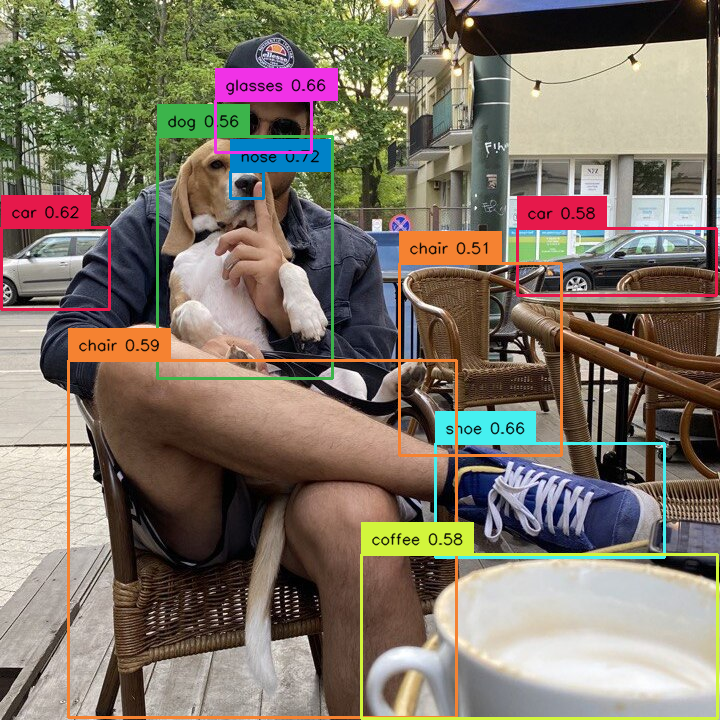
Allows you to select detections with specific confidence value, for example higher than selected threshold.
by area
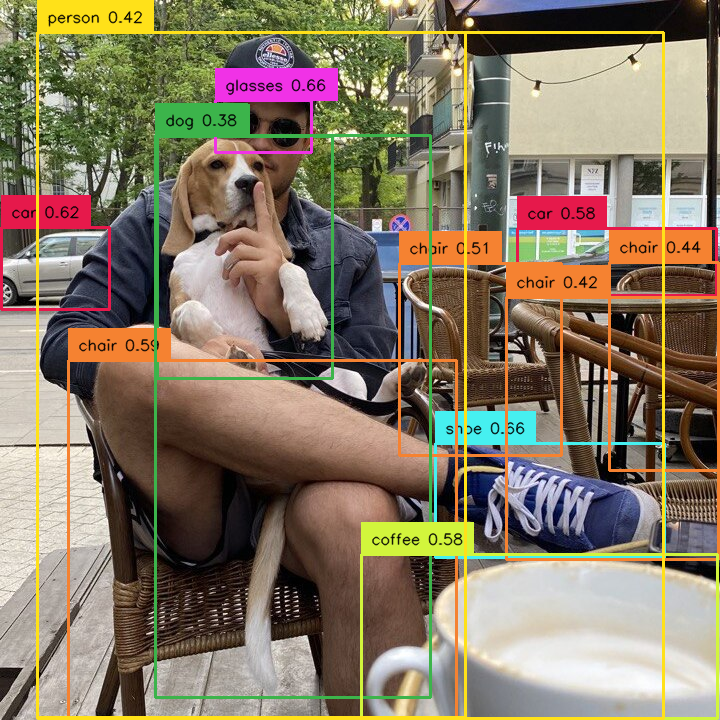
Allows you to select detections based on their size. We define the area as the number of pixels occupied by the detection in the image. In the example below, we have sifted out the detections that are too small.
by relative area
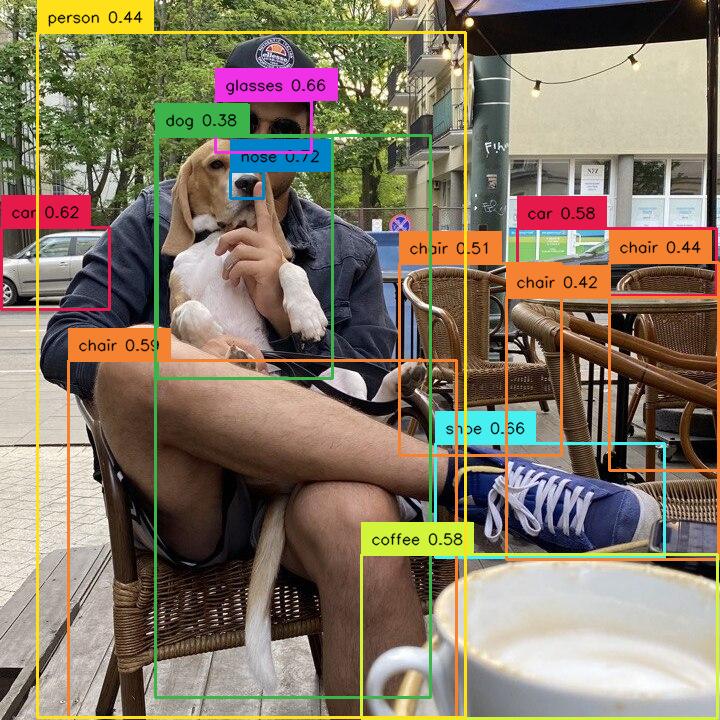
Allows you to select detections based on their size in relation to the size of whole image. Sometimes the concept of detection size changes depending on the image. Detection occupying 10000 square px can be large on a 1280x720 image but small on a 3840x2160 image. In such cases, we can filter out detections based on the percentage of the image area occupied by them. In the example below, we remove too large detections.
from ml_pipes.core import Pipeline
from ml_pipes.supervision import Detections

height, width = image.shape[:2]
image_area = height * width

pipeline = Pipeline(
    [
        ...,
        Detections.FromInference(),
        Detections.Filter(lambda detections: (detections.area / image_area) < 0.8),
    ]
)

filtered_detections = pipeline(detections)
by box dimensions
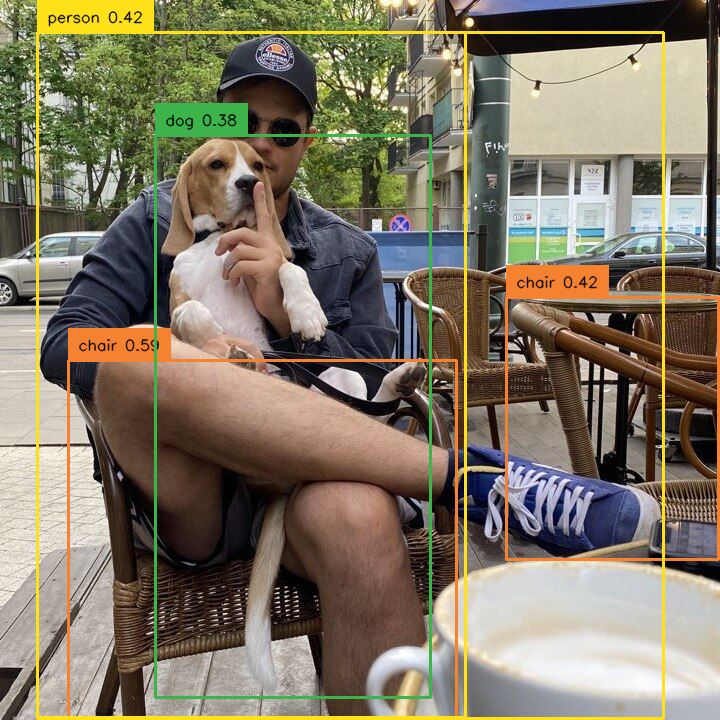
Allows you to select detections based on their dimensions. The size of the bounding box, as well as its coordinates, can be criteria for rejecting detection. Implementing such filtering requires a bit of custom code but is relatively simple and fast.
from ml_pipes.core import Pipeline
from ml_pipes.supervision import Detections
def filter_by_dimensions(detections):
    width = detections.xyxy[:, 2] - detections.xyxy[:, 0]
    height = detections.xyxy[:, 3] - detections.xyxy[:, 1]
    return (width > 200) & (height > 200)

pipeline = Pipeline(
    [
        ...,
        Detections.FromInference(),
        Detections.Filter(filter_by_dimensions),
    ]
)

filtered_detections = pipeline(detections)
by PolygonZone
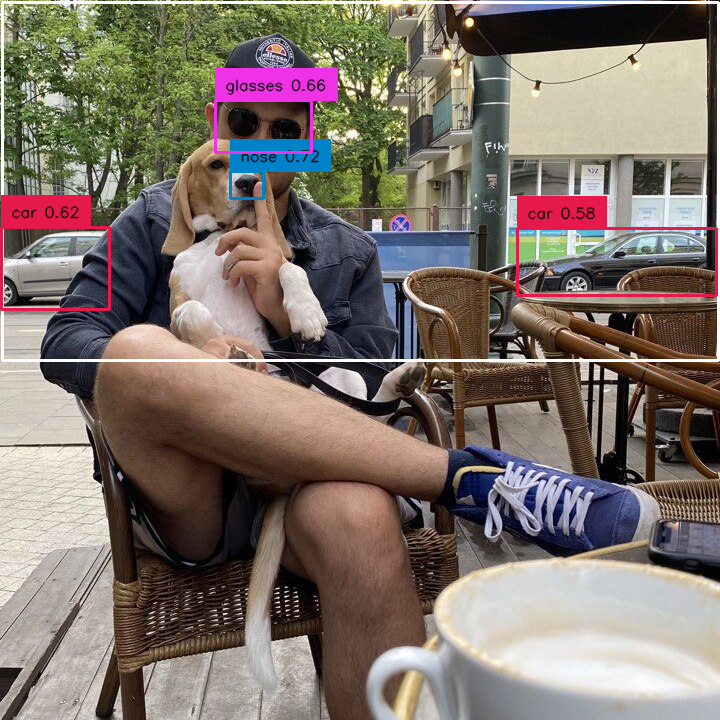
Allows you to use Detections in combination with PolygonZone to weed out bounding boxes that are in and out of the zone. In the example below you can see how to filter out all detections located in the lower part of the image.
by mixed conditions
Combine an ordinary Detections.Filter condition with TriggerZone. The
pipeline applies the same confidence and zone conditions as the direct
Supervision code.
import supervision as sv

from ml_pipes.core import Pipeline
from ml_pipes.supervision import Detections, TriggerZone

zone = sv.PolygonZone(...)
pipeline = Pipeline(
    [
        ...,
        Detections.FromInference(),
        Detections.Filter(lambda detections: detections.confidence > 0.7),
        TriggerZone(zone),
    ]
)

filtered_detections = pipeline(detections)
Frequently Asked Questions
How do I filter detections by class in supervision?
Use NumPy-style boolean indexing: detections[detections.class_id == 0] for class 0. Combine with & or | for multiple conditions.
How do I filter by confidence threshold?
detections[detections.confidence > 0.5] returns only detections above the threshold. Chain with class filters for precise results.
How do I filter by bounding box area?
detections[detections.area > 1000] filters by pixel area. If masks are present, detections.area uses mask area; otherwise, if oriented-box coordinates are present, it uses oriented polygon area; all remaining detections use bounding box area from xyxy. Use detections.box_area when you specifically need axis-aligned bounding box area.
Can I filter by box aspect ratio or dimensions?
Yes. Use detections.box_aspect_ratio for aspect ratio filtering. If you need explicit box dimensions, compute them from detections.xyxy as width = detections.xyxy[:, 2] - detections.xyxy[:, 0] and height = detections.xyxy[:, 3] - detections.xyxy[:, 1].
How do I remove duplicate detections (NMS) from my results?
Use detections.with_nms(threshold=0.5) — it applies non-maximum suppression on the xyxy boxes.
Author
- Piotr Skalski — Computer Vision Engineer, Roboflow